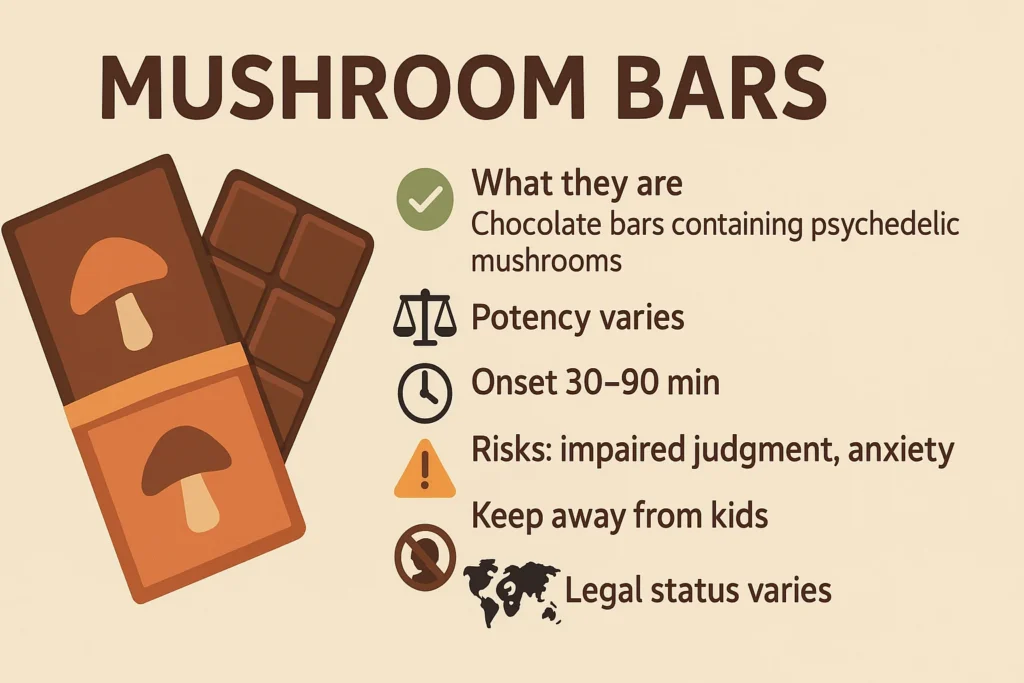
Many readers exploring edible mushroom products often ask can mushroom chocolates affect mood. Mushroom chocolate products combine mushroom-derived compounds with chocolate to create a convenient edible format. Because the brain regulates mood through complex neurotransmitter systems, researchers actively study how compounds found in mushrooms interact with brain chemistry.
As interest in mushroom edibles grows, scientists continue examining how these compounds influence emotional processing and perception. Understanding this connection helps researchers explore the relationship between mushroom compounds, neurotransmitters, and mood regulation.
How Mood Is Regulated in the Brain
The brain regulates mood through several neurotransmitters, including serotonin, dopamine, and norepinephrine. These chemical messengers help control emotional balance, perception, and cognitive processing.
Researchers often focus on serotonin when studying psychedelic compounds. This neurotransmitter plays an important role in emotional stability and neural communication. When compounds interact with serotonin receptors, they can influence how the brain processes emotional signals.
For a deeper explanation of these compounds, see What Is the Difference Between Psilocybin and Psilocin?
Edible Mushroom Products and Brain Chemistry
Edible mushroom products pass through the digestive system before entering the bloodstream. As a result, the body processes these compounds gradually. Once absorbed, certain compounds may interact with brain receptors that influence mood and perception.
Scientists frequently examine how psilocybin-related compounds influence neural signaling and emotional processing. Because these compounds affect serotonin pathways, researchers investigate their role in mood-related brain activity.
To understand how these compounds influence perception, read How Does Psilocybin Change Perception?
Why Researchers Study Mood and Psychedelic Compounds
Scientists continue studying psychedelic compounds because they influence brain networks linked to emotion and cognition. Modern neuroscience research focuses on how neural communication affects emotional awareness, perception, and behavior.
In addition, researchers analyze how compounds interact with brain systems responsible for emotional regulation. By studying these mechanisms, scientists hope to better understand how mood, cognition, and neural signaling connect.
For a broader overview, see How Does Psilocybin Affect the Brain?
The Role of Set and Environment
However, brain chemistry is not the only factor influencing emotional experience. Context also plays an important role. The environment, expectations, and mindset surrounding an experience can strongly affect emotional responses.
Researchers often refer to this concept as set and setting. The term describes how psychological state and surroundings influence perception and emotional interpretation.
You can explore this concept further in What Is Set and Setting?
Why Scientific Research Continues
Although mushroom edibles receive significant public attention, researchers emphasize the importance of controlled scientific studies. Carefully designed clinical research helps scientists understand how compounds interact with brain systems and emotional processes.
As neuroscience research advances, scientists continue exploring how neural signaling influences mood, perception, and cognition. These studies provide valuable insights into the complex relationship between brain chemistry and emotional regulation.