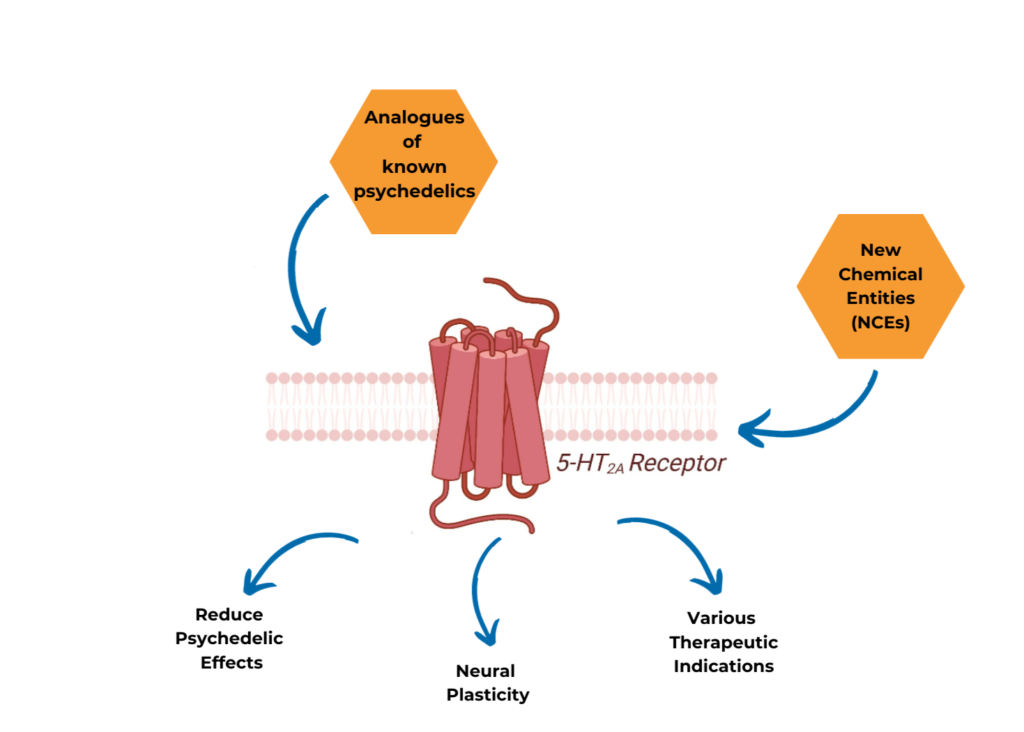
The 5-HT2A receptor is one of the most studied serotonin receptors in neuroscience. Scientists examine this receptor to understand how the brain processes perception, mood, and cognition. It plays a central role in how neurons communicate and how sensory information is interpreted.
Understanding the 5-HT2A receptor helps explain how serotonin signaling influences awareness, emotional response, and cognitive flexibility. Modern brain research often focuses on this receptor because of its strong influence on neural communication.
Understanding Serotonin Receptors
Serotonin receptors respond to the neurotransmitter serotonin, which regulates many biological and psychological functions. These receptors sit on the surface of neurons and react when serotonin molecules bind to them.
Scientists have identified several serotonin receptor families. Each type performs a different function within the nervous system.
Key processes influenced by serotonin receptors include:
- Mood regulation
- Sleep cycles
- Emotional processing
- Appetite control
- Cognitive function
Among these receptor groups, the 5-HT2A receptor receives particular attention in neuroscience research.
Where the 5-HT2A Receptor Is Found in the Brain
This receptor appears in several regions responsible for higher-level brain activity. Researchers often observe high concentrations in areas related to perception and decision-making.
Common locations include:
- The prefrontal cortex, which influences planning and judgment
- The cerebral cortex, which processes sensory information
- The thalamus, which helps relay signals throughout the brain
Because these areas shape awareness and perception, the receptor can influence how the brain interprets sensory input.
For a broader overview of how the brain processes perception, see:
https://neautropic.com/how-does-psilocybin-affect-the-brain/
How This Receptor Influences Brain Signaling
Neurons communicate by releasing chemical messengers across synapses. When serotonin binds to its receptors, it activates signaling pathways that influence neural activity.
Activation of the 5-HT2A receptor can affect:
- communication between brain networks
- sensory interpretation
- emotional responses
- cognitive flexibility
These interactions help researchers understand how brain chemistry shapes human perception and behavior.
Scientific databases such as the National Institutes of Health host extensive research on serotonin receptor function.
For peer-reviewed studies, visit:
https://pubmed.ncbi.nlm.nih.gov/?term=5-HT2A+receptor
Why Neuroscientists Study This Receptor
Neuroscience research focuses on how the brain adapts and reorganizes its neural pathways. This process is often linked to neuroplasticity, the brain’s ability to form new connections.
The receptor has become important in studies examining:
- perception and consciousness
- cognitive adaptability
- emotional regulation
- brain network connectivity
These areas help scientists understand how neurotransmitters influence the way people think, perceive, and respond to experiences.
You can explore more about brain adaptation here:
https://neautropic.com/what-is-neuroplasticity-and-how-is-it-linked-to-psilocybin/
The Role of Serotonin in Brain Function
Serotonin acts as a major chemical messenger in the nervous system. It influences both physical and psychological processes.
Functions affected by serotonin include:
- emotional balance
- memory and learning
- sleep patterns
- appetite regulation
- sensory processing
Because receptors respond to serotonin signals, they help regulate how these processes operate within the brain.
To learn how brain chemistry affects perception, read:
https://neautropic.com/how-does-psilocybin-change-perception/
Ongoing Research in Neuroscience
Advances in brain imaging technology allow researchers to observe neural networks in greater detail. Scientists continue to investigate how serotonin receptors affect cognition and perception.
Universities such as Johns Hopkins University and Imperial College London conduct studies examining brain connectivity and neurotransmitter systems.
These studies contribute to a broader understanding of how brain chemistry shapes behavior and experience.
Frequently Asked Questions
What is the function of the 5-HT2A receptor?
This receptor helps regulate how the brain processes perception, cognition, and emotional signals. It responds to serotonin and influences communication between neurons.
Why is this receptor important in neuroscience?
Researchers study it because it affects brain networks involved in awareness, perception, and cognitive flexibility.
Where is the receptor located?
It appears mainly in areas such as the cerebral cortex and prefrontal cortex, both of which support higher cognitive functions.