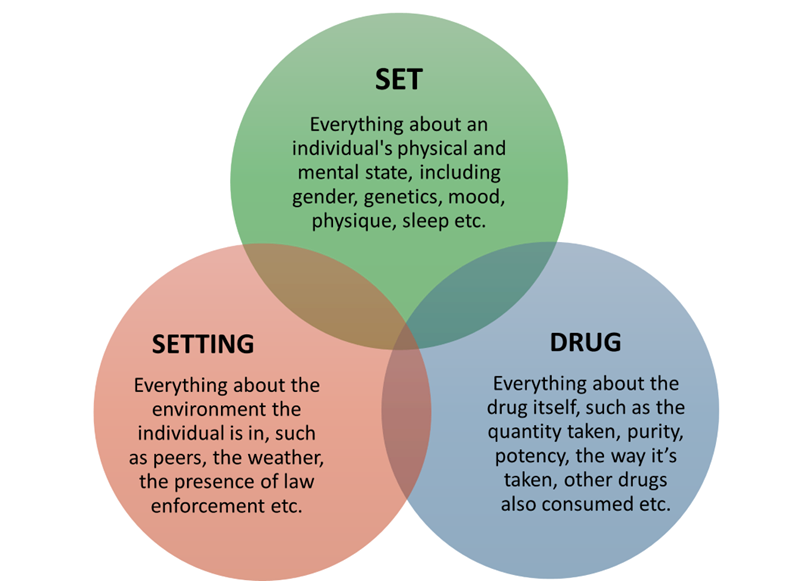
What is set and setting? This phrase is commonly used in discussions about psychedelic research and refers to the psychological and environmental factors that influence a person’s experience.
Understanding set and setting is important because scientific studies suggest that mindset and surroundings can significantly shape how an individual perceives and responds to certain compounds.
This article explains what set and setting mean, where the concept comes from, and why it is frequently discussed in research contexts.
What Does “Set” Mean?
In the phrase set and setting, set refers to a person’s internal state.
This includes:
- Mood
- Expectations
- Personality traits
- Emotional condition
- Prior experiences
A person who feels calm, prepared, and informed may interpret experiences differently from someone who feels anxious or uncertain.
Researchers studying psychedelics have noted that mindset can influence perception, emotional response, and memory formation during controlled sessions.
What Does “Setting” Mean?
Setting refers to the external environment in which an experience takes place.
This includes:
- Physical surroundings
- Lighting and sound
- Social environment
- Presence of trusted individuals
- Overall comfort and safety
Clinical research environments are carefully structured to provide a controlled and supportive setting.
Institutions such as Johns Hopkins University have published research describing how therapeutic settings are designed to minimize stress and promote psychological safety.
Scientific discussions about environmental influence can be explored here:
https://pubmed.ncbi.nlm.nih.gov/?term=psychedelic+set+and+setting
Why Set and Setting Matter in Research
Research suggests that perception is not influenced solely by pharmacology. Psychological context plays a role in how experiences are interpreted.
Studies indicate that:
- Expectations can influence perceived intensity
- Emotional state may affect interpretation
- Environmental cues can shape memory of the experience
Because of these factors, clinical trials involving psychedelics place significant emphasis on preparation and environment.
Historical Background of the Term
The concept of set and setting became widely discussed in the 1960s during early psychedelic research. Researchers observed that identical compounds could produce different experiences depending on context.
Since then, the term has remained central to scientific and academic discussions about psychedelic studies.
Set and Setting in Modern Clinical Trials
Modern clinical trials use structured protocols that may include:
- Pre-session psychological preparation
- Calm, controlled rooms
- Trained facilitators or clinicians
- Post-session integration discussions
These elements are designed to reduce unpredictable variables and improve participant safety.
For foundational reading, see:
/what-are-psilocybin-mushroom-chocolates
/how-do-mushroom-chocolates-work-in-the-body
Legal and Safety Considerations
Psilocybin remains classified as a controlled substance in many jurisdictions. Legal status varies by country and region.
For official information in Germany, visit:
https://www.bundesgesundheitsministerium.de/
Clinical research involving psychedelics is conducted under medical supervision and ethical review protocols.
This article is provided for educational purposes only and does not encourage unlawful activity.
Frequently Asked Questions
What is set and setting in simple terms?
Set refers to mindset. Setting refers to environment. Together, they describe the internal and external factors influencing an experience.
Does set and setting really affect outcomes?
Research suggests psychological and environmental context can influence perception and emotional interpretation.
Is set and setting only relevant to psychedelics?
While commonly discussed in psychedelic research, the concept of mindset and environment influencing perception applies more broadly in psychology.