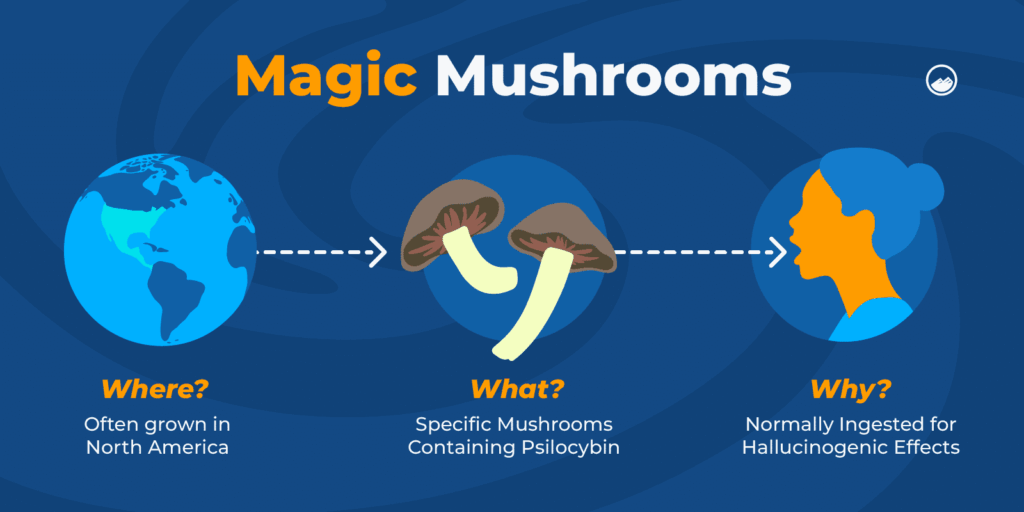
Many people exploring psychedelic research often ask who should not take psilocybin. Psilocybin is a compound that interacts with brain chemistry and perception. However, it does not affect everyone the same way. Because individual health, environment, and biological factors vary, certain individuals should approach psilocybin with caution or avoid it altogether.
Understanding who should not take psilocybin helps highlight important safety considerations and supports responsible decision-making.
Individuals With Certain Mental Health Conditions
People with a history of specific mental health conditions should exercise caution. Researchers often study how compounds interact with brain signaling and emotional processing, and these interactions may affect individuals differently.
For example, individuals with a history of severe anxiety or other mental health conditions may respond more strongly to changes in perception and cognition.
To understand how these compounds affect the brain, see How Does Psilocybin Affect the Brain?
Individuals Taking Certain Medications
Some medications influence brain chemistry, particularly those that affect serotonin levels. Because psilocybin interacts with serotonin receptors, combining it with certain medications may alter how the body responds.
Researchers continue studying these interactions to better understand how compounds influence neural signaling.
For a deeper explanation of serotonin interaction, read What Is the 5-HT2A Receptor and Why Does It Matter?
Pregnant or Breastfeeding Individuals
Pregnant or breastfeeding individuals should avoid using substances that have not been fully studied for safety during these periods. Research on psilocybin and pregnancy remains limited, so caution is recommended.
For related considerations, see Can Pregnant Women Drink Mushroom Coffee?
Individuals Sensitive to Edible Products
Some individuals may be more sensitive to edible formats. Because edible products are processed through digestion, their effects may take longer to appear and vary depending on metabolism and body chemistry.
To understand edible timing, see How Long Do Psilocybin Edibles Last?
The Importance of Set and Environment
Context plays a significant role in how individuals experience changes in perception. Factors such as mindset, environment, and expectations can influence how someone responds.
Researchers often refer to this as set and setting, which describes the psychological and environmental context of an experience.
You can learn more in What Is Set and Setting?
Why Scientific Research Matters
Scientists continue studying psilocybin to better understand how it interacts with biological systems and brain networks. Research helps identify factors that influence individual responses and supports safer approaches to studying these compounds.
If you want to explore clinical research on psilocybin safety and individual differences, you can review peer-reviewed studies available in scientific databases.
Making Informed Decisions
Because individual responses vary, understanding personal health conditions and environmental factors is essential. Researchers emphasize informed decision-making and awareness when exploring compounds that influence perception and brain chemistry.