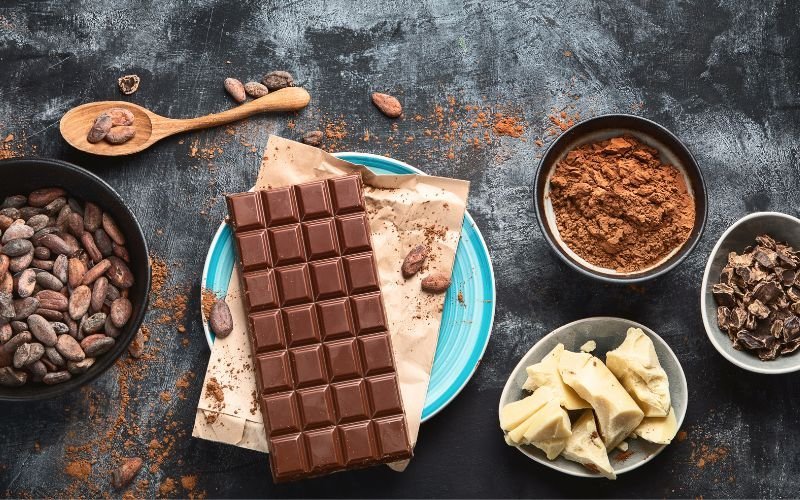
Many readers ask how mushroom chocolate is made and why this edible format has become popular. Mushroom chocolate blends cacao with mushroom-derived ingredients to create a structured edible product. Because chocolate mixes well with powdered ingredients, manufacturers use it to create consistent portions while improving flavor.
This guide explains how mushroom chocolate is made, which ingredients are involved, and why chocolate works well as an edible base.
How Mushroom Chocolate Is Made
First, manufacturers prepare the chocolate base. They melt cacao and carefully temper it to create a smooth and stable texture. Next, they mix powdered mushroom material or standardized extracts into the melted chocolate. This step ensures the ingredients distribute evenly throughout the mixture.
After that, producers pour the blended chocolate into molds. These molds divide the mixture into measured sections. Finally, the chocolate cools and solidifies, forming a structured chocolate bar that can be broken into smaller pieces.
Because this process allows precise portioning, manufacturers can create products with consistent structure and distribution.
Ingredients Used in Mushroom Chocolate
Most mushroom chocolate products contain a few key ingredients. These ingredients create both the texture and flavor of the final product.
Common ingredients include:
- cacao or cocoa butter
- sweeteners such as sugar or alternative sweeteners
- mushroom powder or standardized extracts
- flavor additions such as vanilla
Cacao has a naturally strong flavor. Therefore, it helps balance the taste of other ingredients while maintaining a smooth texture.
For example, digestion timing depends on how the body processes edible products. You can learn more about this in how long mushroom chocolates take to kick in.
Why Chocolate Works Well as an Edible Base
Chocolate works well in edible products for several reasons. First, it blends easily with powdered ingredients. Second, it creates a stable texture that holds its shape after cooling. Finally, chocolate bars can be divided into consistent segments.
Because of these advantages, many edible products use chocolate as their base. In addition, chocolate improves flavor compared with raw ingredients.
For instance, some people compare chocolate edibles with raw mushroom material. You can explore that comparison in do mushroom chocolates feel different from raw mushrooms.
How Mushroom Chocolate Works in the Body
After someone consumes mushroom chocolate, the digestive system begins breaking down the chocolate and its ingredients. Then the body absorbs compounds through the digestive tract. Because edible products pass through digestion first, onset timing often differs from other formats.
However, several factors influence digestion speed. For example, metabolism, stomach contents, and individual biology all affect timing.
To understand this process better, see how mushroom chocolates work in the body.
Why Researchers Study Edible Formulations
Scientists continue studying edible formulations to understand ingredient stability, absorption timing, and product consistency. These factors influence how the body processes compounds delivered through food-based formats.
Research institutions such as National Institutes of Health publish studies related to digestion, food science, and bioactive compounds.
You can also explore peer-reviewed research here:
https://pubmed.ncbi.nlm.nih.gov/
Frequently Asked Questions
How is mushroom chocolates made?
Manufacturers melt chocolate, blend mushroom powder or extracts into the mixture, pour it into molds, and allow it to cool into structured bars.
Why is chocolate used in edible products?
Chocolate blends easily with powdered ingredients, improves taste, and allows consistent portioning.
Does chocolate affect edible timing?
Chocolate mainly influences flavor and texture. However, digestion speed may vary depending on metabolism and stomach contents.