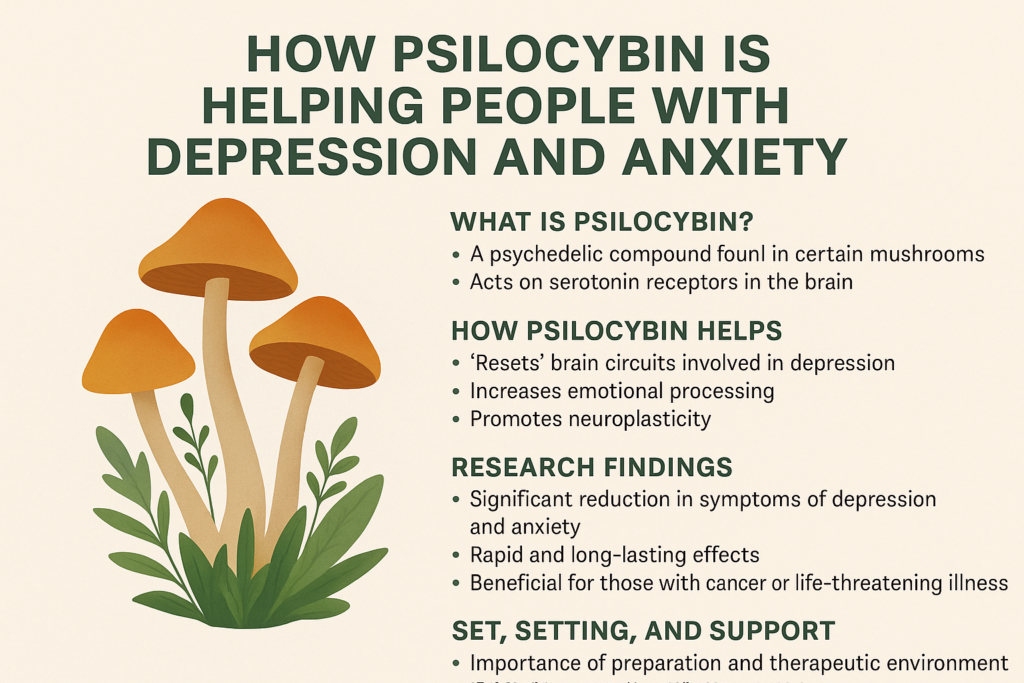
Many people exploring psychedelic research ask can psilocybin cause anxiety. Psilocybin is a compound that affects brain chemistry and perception, and while researchers study its effects in controlled environments, individual responses can vary. Because it interacts with serotonin receptors and brain networks, psilocybin may influence emotional processing, including feelings related to anxiety.
Understanding can psilocybin cause anxiety helps explain how brain activity, context, and individual factors all contribute to emotional responses.
How Psilocybin Affects Emotional Processing
Psilocybin interacts with serotonin receptors in the brain, particularly those involved in mood and perception. This interaction can influence how the brain processes thoughts, emotions, and sensory input.
As a result, emotional responses may feel amplified. In some cases, this may include increased awareness of internal thoughts or feelings.
To understand how perception changes, see How Does Psilocybin Change Perception?
Why Anxiety May Occur
Anxiety can occur when the brain processes unfamiliar or intense sensory and emotional signals. Because psilocybin alters how information is interpreted, individuals may experience temporary feelings of uncertainty or discomfort.
Several factors can influence whether anxiety occurs:
- mindset before the experience
- environment and surroundings
- dosage and timing
- individual sensitivity
These factors all play a role in how the brain responds during the experience.
For safety considerations, see Who Should Not Take Psilocybin?
The Role of Set and Environment
Researchers emphasize that context strongly influences emotional responses. The concept of set and setting refers to a person’s mindset and environment at the time of the experience.
A calm and prepared environment may reduce uncertainty, while an unfamiliar or stressful setting may increase emotional intensity.
To learn more, see What Happens If You Take Too Much Mushroom Chocolate?
What Research Focuses On
Scientists continue studying how psilocybin affects emotional processing and brain activity. Research often examines how serotonin signaling and neural connectivity influence mood and perception.
If you want to explore clinical research on psilocybin and anxiety responses, you can review peer-reviewed studies that examine how individuals respond under controlled conditions.
Why Individual Response Matters
Not everyone experiences the same effects. Factors such as biology, expectations, and environment all influence how someone responds.
Because of this variability, researchers focus on controlled settings to better understand how psilocybin interacts with the brain.
Understanding can psilocybin cause anxiety highlights the importance of awareness, preparation, and context when studying how compounds influence emotional processing.